
Solar Panel Clean
We clean your solar panels to get maximum energy generation. Your solar panels will come up shiny like new, ready to provide you with maximum electricity output. Get your solar panels cleaned regularly to maintain quality power generation and extend the life of your solar panels.
Why Solar Panels Need Cleaning?
Solar panels generate electricity by converting sunlight into energy. When their surface is dirty or coated with grime, less sunlight reaches the solar cells, resulting in reduced energy output and efficiency. Studies and industry data indicate that dirty panels can lose a significant portion of their performance—often 5% to 20% or more—depending on the conditions. In particularly dusty or coastal environments, this loss can even reach 25% to 30%.Main Benefits of Regular Cleaning
- Maximised Energy Production: Clean solar panels absorb more sunlight, which increases electricity generation and helps lower your energy bills or enhance feed-in credits.
- Improved Efficiency: Removing obstructions, such as dirt and bird droppings, allows the panels to operate closer to their rated capacity.
- Extended Panel Lifespan: Dirt and residues can cause wear and corrosion over time. Regular maintenance helps protect the panels and prolong their life.
- Better Return on Investment: Higher efficiency and a longer system lifespan mean you gain more value from your solar installation.
- Warranty Compliance: Some manufacturers require regular cleaning and maintenance to keep warranties valid.
Before and After Comparisons
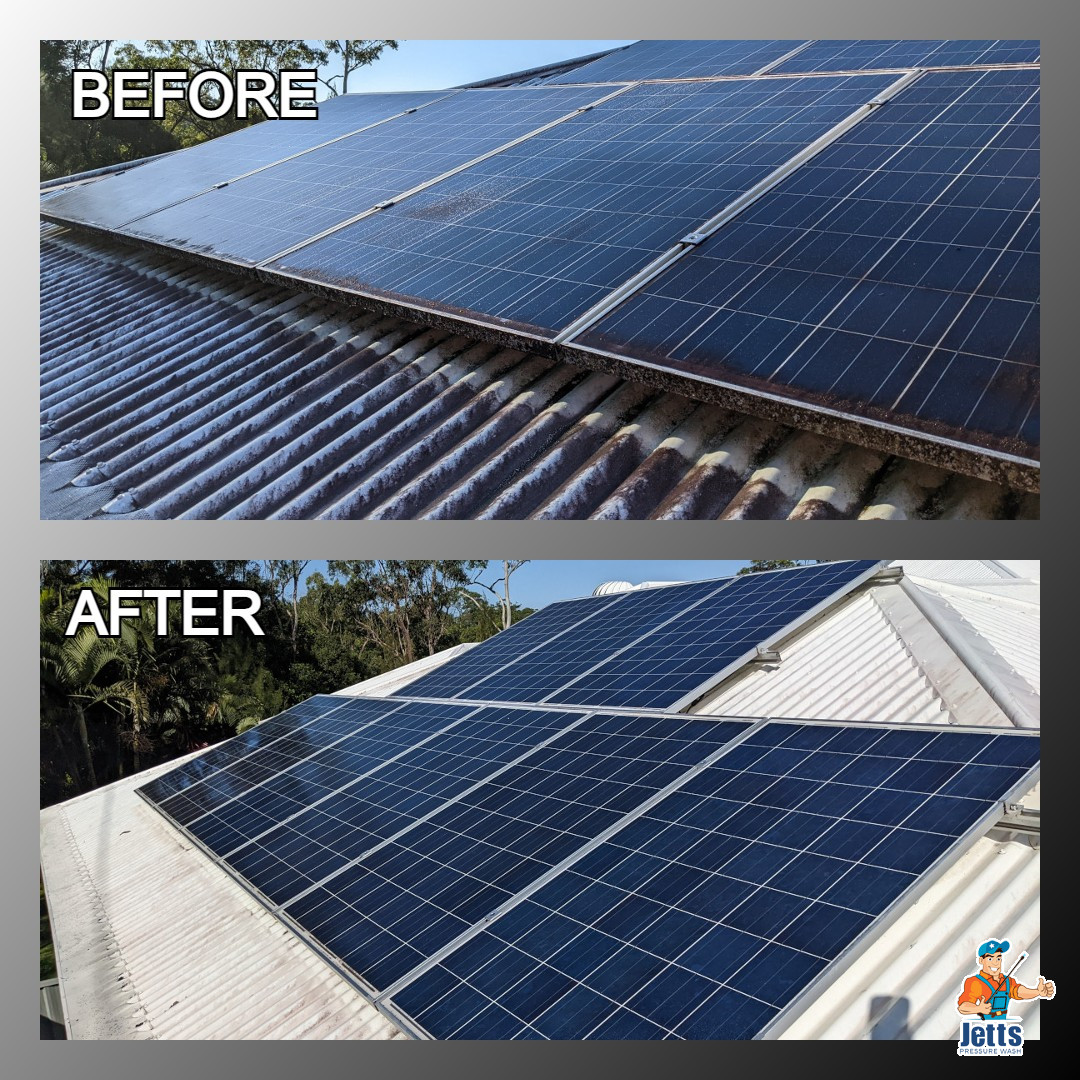
Check out this before and after slider to see how solar panel cleaning can shine up your solar panels.

Solar Panel Clean Gallery
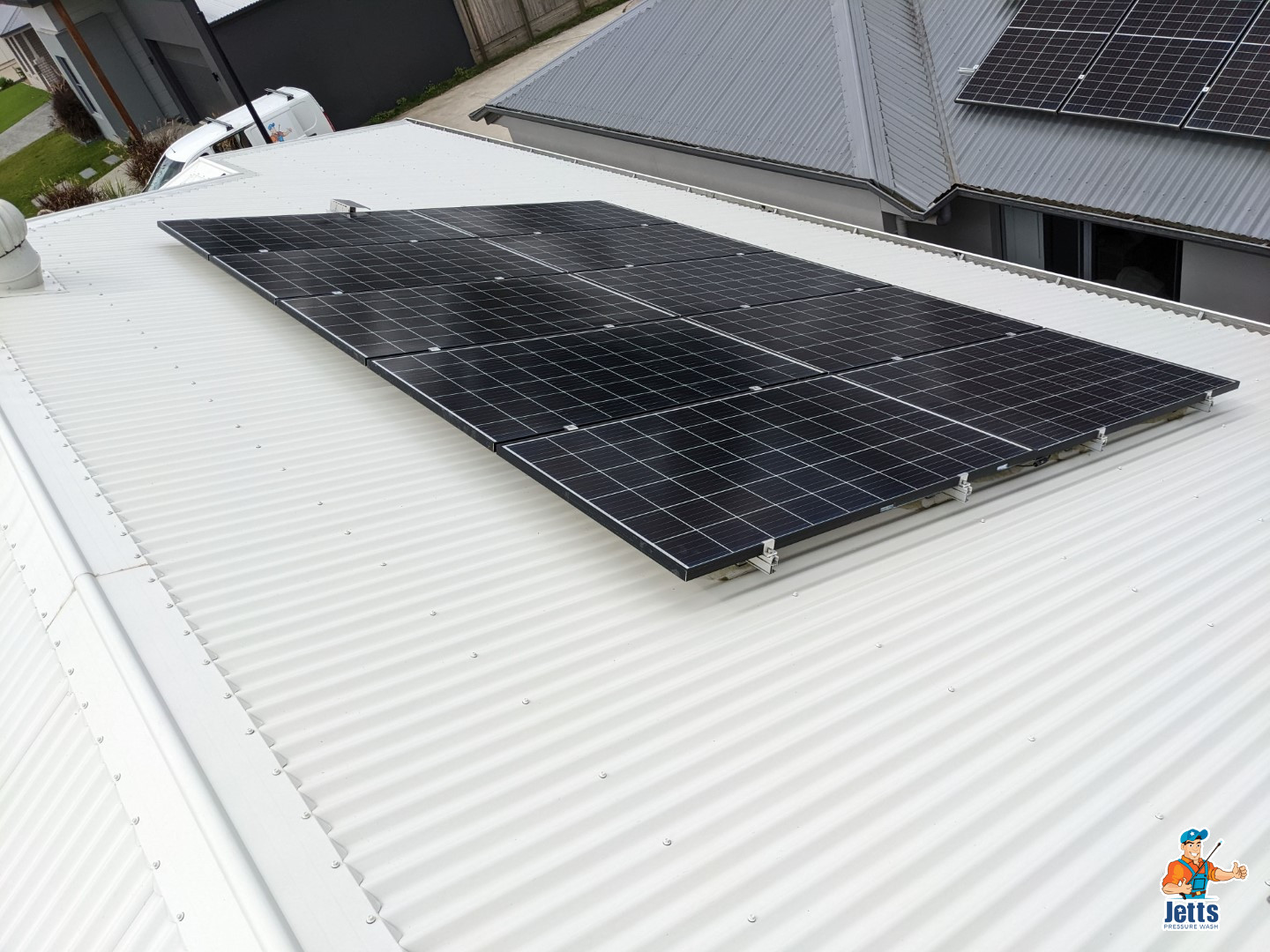
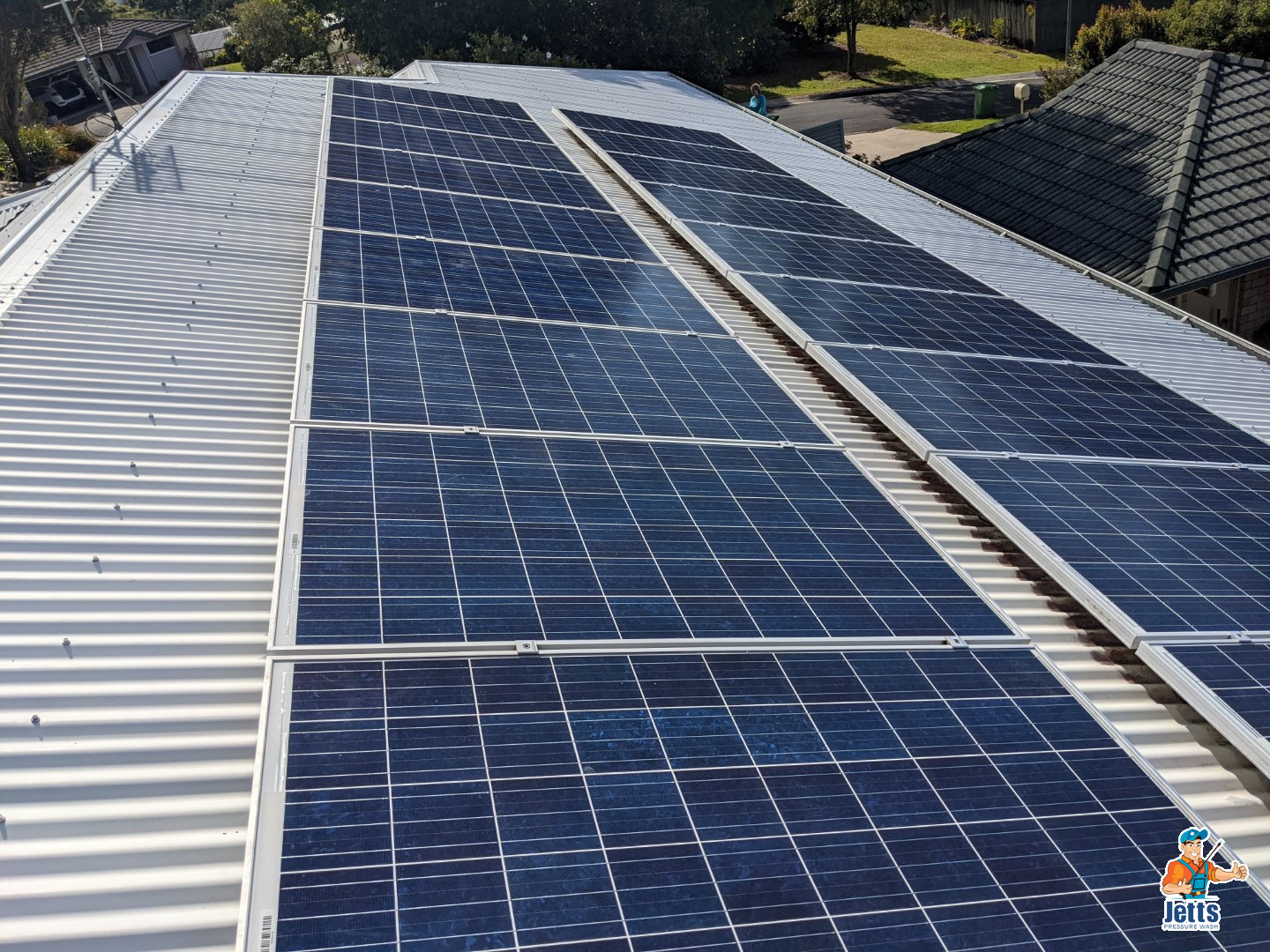
Take a look at these photos of clean solar panels.



Recent Work in Solar Panel Clean

Solar Panel Clean Peregian Springs
Over time, solar panels get dirty and dusty, and need to be cleaned regularly to ensure maximum power generation. If solar panel maintenance is neglected for too long, a layer of baked-on dirt can build up, making them very difficult to clean. The solar panels on this...

Solar Panel Clean Nambour
Yuck! Just look at the grime that's built up on these solar panels in Nambour. The bottom strip on solar panels will get like this over time, and it just looks terrible. Luckily, it's easy to clean using the Jetts pressure wand. We also clean the surface of the solar...
Gutter & Solar Panel Clean Conondale
Many rural areas on the Sunshine Coast rely on rainwater tanks for their water supply. This old Queenslander in Conondale is a classic example of a house that relies on water collected from the roof. But with the gutters full of leaves and other debris, the water in...
Tile Roof & Gutter Clean Mudjimba
Tile roofs are more challenging to clean than metal roofs. The porous nature of tiles means that mould and grime get right in to all the small cracks, making it difficult to get out. Also over time the tiles start to erode, and they need to be cleaned and sealed to...
Frequently Asked Questions and Answers
Do solar panels really need cleaning?
Yes. Dirt, dust, bird droppings, and pollution can block sunlight and reduce how much power your panels produce.
How much efficiency do dirty solar panels lose?
Dirty panels can lose 5%–20% efficiency, and sometimes more in dusty, coastal, or dry areas.
Is rain enough to clean solar panels?
Rain helps a little, but it usually doesn’t remove sticky dirt, bird droppings, or salt buildup. Manual cleaning is still needed.
How often should solar panels be cleaned?
There’s no one-size-fits-all rule — it depends on your location, climate, and environmental conditions. However:
- Every 6 – 12 months is a common guideline for many homes.
- More often may be needed in dusty, coastal, dry, or high-pollution areas.
- If you notice a visible buildup or a drop in energy output, it’s a good sign that panels need cleaning.
What is the best time of day to clean solar panels?
Early morning or late afternoon, when panels are cool, to avoid damage and streaking.
Can I clean solar panels myself?
Yes, if they’re easy to reach. Use soft brushes, clean water, and no harsh chemicals. Avoid climbing on roofs if it’s unsafe.
Is professional solar panel cleaning worth it?
Yes. Professionals clean safely, use proper tools, and may spot issues early — especially for roof-mounted systems.
What should NOT be used to clean solar panels?
- High-pressure washers
- Abrasive brushes or sponges
- Strong detergents or chemicals
These can damage the glass or seals.
Can cleaning damage solar panels?
Should the solar system be turned off before cleaning?
How do I know if my panels need cleaning?
- Visible dirt or bird droppings
- A noticeable drop in energy production
- Long time since the last clean
Will cleaning solar panels save money?
Yes. Clean panels produce more electricity, which can lower power bills and improve return on investment.
Does cleaning help solar panels last longer?
Yes. Removing dirt and residue helps prevent long-term wear and keeps the system in better condition.
Do commercial solar systems need cleaning too?
Absolutely. Businesses often clean panels more frequently to maintain consistent energy output and financial performance.
What are the differences between DIY cleaning and Professional cleaning?
- DIY cleaning can be effective if the panels are easily accessible, such as those on a low roof. However, if you’re not careful, harsh cleaning methods may damage the panels.
- Professional cleaning services are safer and more thorough. Technicians use proper tools, such as de-ionised water and soft brushes, adhere to safety protocols, and perform system inspections.